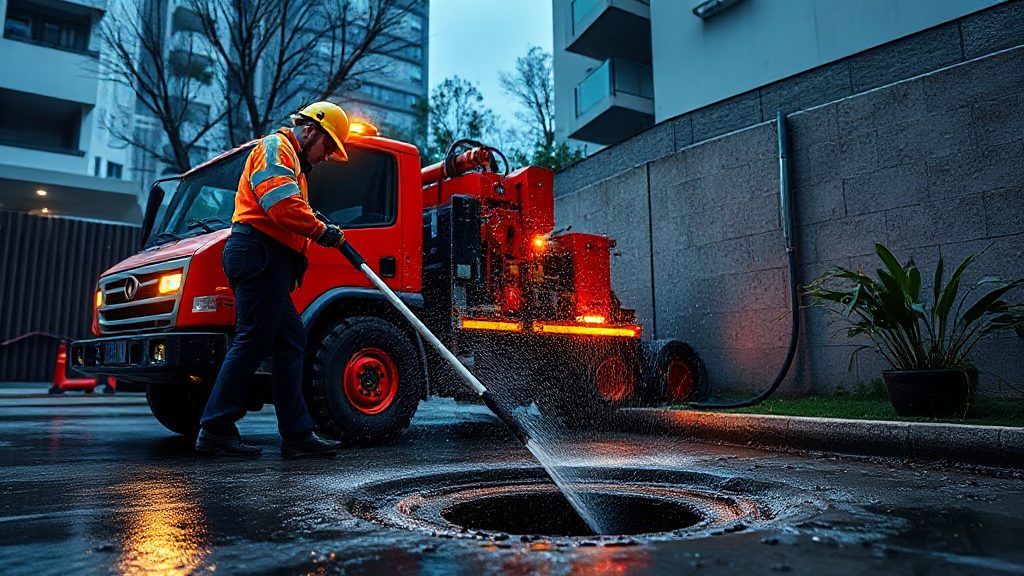
How a Desentupidora em Parelheiros São Paulo SP Clears a Blocked Drain in One Visit
By the end of this account you will know exactly what happens when you call a desentupidora em Parelheiros São Paulo SP for a backed-up drain: who arrives, what they check first, which machine they reach for, and how the job is closed out so the same blockage does not return next month. I work these calls in the far south of São Paulo, and the routine is more predictable than most homeowners expect.
Parelheiros sits at the edge of the city, where older houses, newer condominiums and small commercial kitchens share the same aging sewage network. That mix shapes the work. A blockage here is rarely just “a clog” — it is usually roots, grease, or a collapsed section of pipe that has been quietly failing for years.
What the First Thirty Minutes on Site Actually Look Like
We arrive, and before any machine comes off the truck, I walk the property. I ask where the water backs up, when it started, and whether it happens after rain or after the household uses hot water. Those three answers usually tell me whether I am dealing with a branch line, a main line, or a storm drain connection.
Next comes the inspection point. In most Parelheiros homes that is the inspection box near the street or the cleanout behind the kitchen. I open it and look at the standing water: grey and soapy points to a fixture line, dark and foul points to the sewage branch, and clear water after rain points to a storm connection that should not be tied into the sanitary line at all.
Only then do I choose equipment. A hand auger handles a soft blockage close to the fixture. A motorized cable machine handles grease and paper further down. A high-pressure jetter handles roots, scale and hardened sludge. Choosing the wrong tool first is the most common reason a cheap call-out turns into a second visit.
The tools that decide the outcome
- Manual auger — short runs, soft blockages, sinks and floor drains.
- Motorized cable — grease, soap residue and paper in branch lines up to about 30 metres.
- Hydro-jetter — roots, scale and compacted sludge; it scours the pipe wall rather than punching a hole through the clog.
- Inspection camera — confirms the pipe is clear and shows cracks, misalignments or root intrusion before we close the job.
The camera is not a luxury. On older streets in this district, a pipe can look clear from the surface and still be half collapsed two metres in. Seeing it on screen is what separates a repair from a repeat call.
Why Parelheiros Blockages Behave Differently From Central São Paulo
Most of the housing stock here was built without the deep-graded drainage that central neighbourhoods have. That means shorter runs, more bends, and more properties sharing a single connection to the street main. When one line backs up, two or three neighbours often notice at the same time.
Tree roots are the biggest single cause I see. Ficus and eucalyptus roots find the condensation at a joint and work inward. Grease from home kitchens then catches on the root mass and the pipe closes within a season. A desentupidora Parelheiros crew that only plunges the line will clear it for a week; jetting plus a camera check is what actually holds.
Rain matters too. In the wet season, storm water infiltrates cracked pipes and overloads the sanitary line. If your drain backs up only during heavy rain, the problem is likely infiltration, not a household clog, and the fix belongs at the pipe joint rather than at the sink.
What a proper close-out includes
- Run water through every fixture on the affected line and watch the inspection box.
- Camera the run and record the footage for the owner or building manager.
- Report any defect — crack, root entry point, sag — with its approximate distance from the cleanout.
- Recommend jetting frequency for grease-heavy kitchens, usually every six to twelve months.
That written record matters for condominiums. A síndico who can show the camera footage and the date of the last jetting has a defensible maintenance history when the next blockage happens.
What It Costs and When to Call Instead of Waiting
Pricing on an emergency call depends on access, depth and method. A straightforward branch-line clearance is the cheapest tier. A main-line jetting with camera inspection sits in the middle. Excavation or pipe lining, when the camera shows a collapsed section, is a separate repair and should always be quoted after the footage is reviewed, never before.
Call immediately if sewage is rising into a floor drain, if more than one fixture is backing up at once, or if you smell gas near the inspection box. Those three signs mean the main line is blocked, and waiting overnight usually turns a clearance into a cleanup. A desentupidora Parelheiros São Paulo SP team working 24 hours can jet the line at night when street access is easier and the building is quiet.
What you get by the end of the visit is simple: water draining at full speed, a camera record of a clean pipe, and a written note on what to watch. That is the whole routine — inspect, choose the right tool, verify with the camera, and document. Done in that order, most Parelheiros blockages are solved in a single call rather than becoming a monthly annoyance.